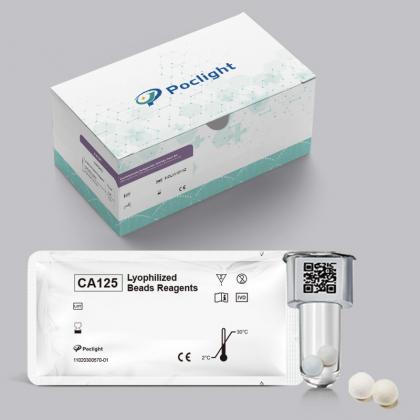
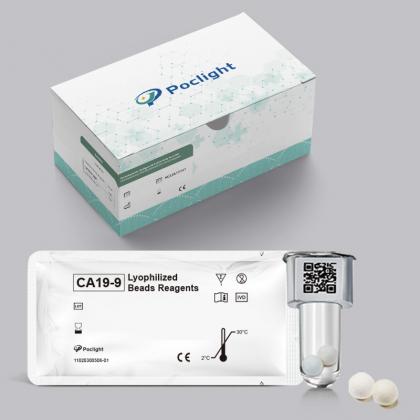
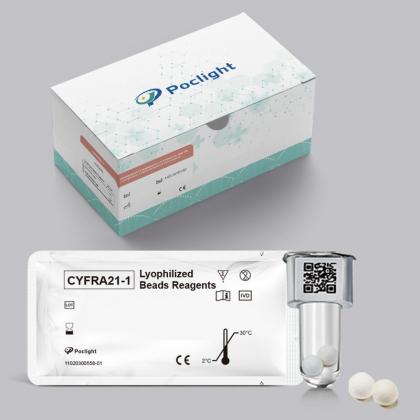
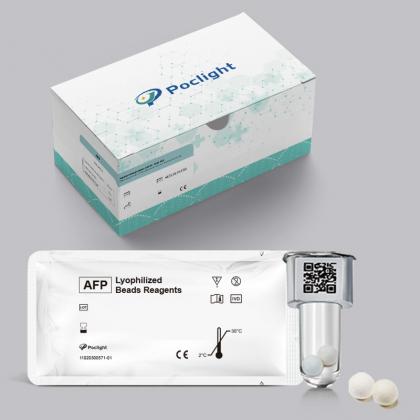
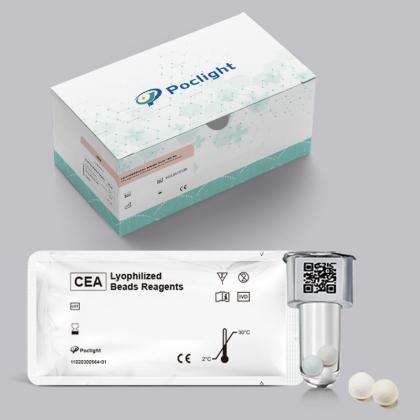
The Poclight C5000 uses chemiluminescence resonance energy transfer (CRET) in a homogeneous immunoassay format. Its acridinium ester–graphene oxide detection system enables signal discrimination without magnetic-bead separation or washing. Combined with single-test lyophilized reagents and a compact instrument design, this approach simplifies operation and supports assay times commonly ranging from 3 to 15 minutes.
Key Takeaways
· CRET-based homogeneous detection eliminates the magnetic-bead separation and washing sequence.
· The C5000 combines a compact benchtop design with reduced wash-system maintenance.
· Seven independent channels support parallel testing; assay time and specimen requirements depend on the test.
CRET Technology for Wash-Free Chemiluminescence
Many conventional heterogeneous chemiluminescence immunoassays (CLIA) separate bound and unbound labels before measurement. Poclight’s CRET-based design instead uses changes in graphene oxide quenching to discriminate signals within the reaction mixture. Removing the bound/free separation step simplifies the assay workflow and reduces the need for washing hardware.
How CRET Generates a Signal Without Washing
CRET describes nonradiative energy transfer from a chemically excited donor to a suitable nearby acceptor; it does not require an external excitation light source. In a homogeneous immunoassay, the reaction is measured without physically separating bound and free components. CRET is an energy-transfer principle, rather than a synonym for all homogeneous immunoassays.
Poclight uses acridinium ester (AE) as the chemiluminescent label and graphene oxide (GO) as the quencher. In the sandwich-format example illustrated above, target-dependent DNA assembly and enzyme-mediated processing change the labeled species’ interaction with GO, reducing quenching and increasing the measured signal. The scheme is an assay-design example; competitive assays and other reagent formulations may use different signal–concentration relationships.
How Graphene Oxide Quenching Replaces Separation
GO can suppress AE chemiluminescence when the labeled species is associated with or sufficiently close to its surface. Changes in this interaction allow the assay to distinguish target-dependent signal from background without removing unreacted labels.
Signal intensity is converted to analyte concentration using an assay-specific calibration relationship. Sensitivity, precision, interference resistance, and measuring range must be established for each reagent–instrument combination; they cannot be inferred from quenching alone.
How Wash-Free Testing Simplifies Fluidics
Removing magnetic-bead washing eliminates the associated separation, wash-buffer delivery, and wash-effluent handling steps. This simplifies instrument architecture. It does not imply that every wash-free analyzer has no liquid handling: sample addition, reagent reconstitution, and signal-triggering reagents may still be required.
For the C5000, the main operational benefit is reduced washing-related complexity. Single-test cuvettes also limit shared sample-contact surfaces, although correct pipetting, cleaning, and biosafety procedures remain necessary to control contamination.
The table below distinguishes direct workflow benefits from characteristics that require assay-specific validation.
|
Feature or Requirement |
Relevance to Decentralized Testing |
|
Homogeneous detection |
No physical bound/free separation before measurement |
|
No washing step |
Fewer washing-related operations and consumables |
|
Precision |
Requires assay-specific validation and routine quality control |
|
Reduced wash effluent |
No wash-buffer effluent; residual sample and used cuvettes still require disposal |
|
Measuring range |
Depends on the individual assay and calibration |
|
Sample volume |
Assay-dependent; small-volume sampling is available for selected tests |
|
Analytical and clinical performance |
Sensitivity, specificity, and clinical utility require separate evaluation |
|
Throughput |
Depends on channel number, assay duration, and handling |
Poclight CRET Technology in the C5000
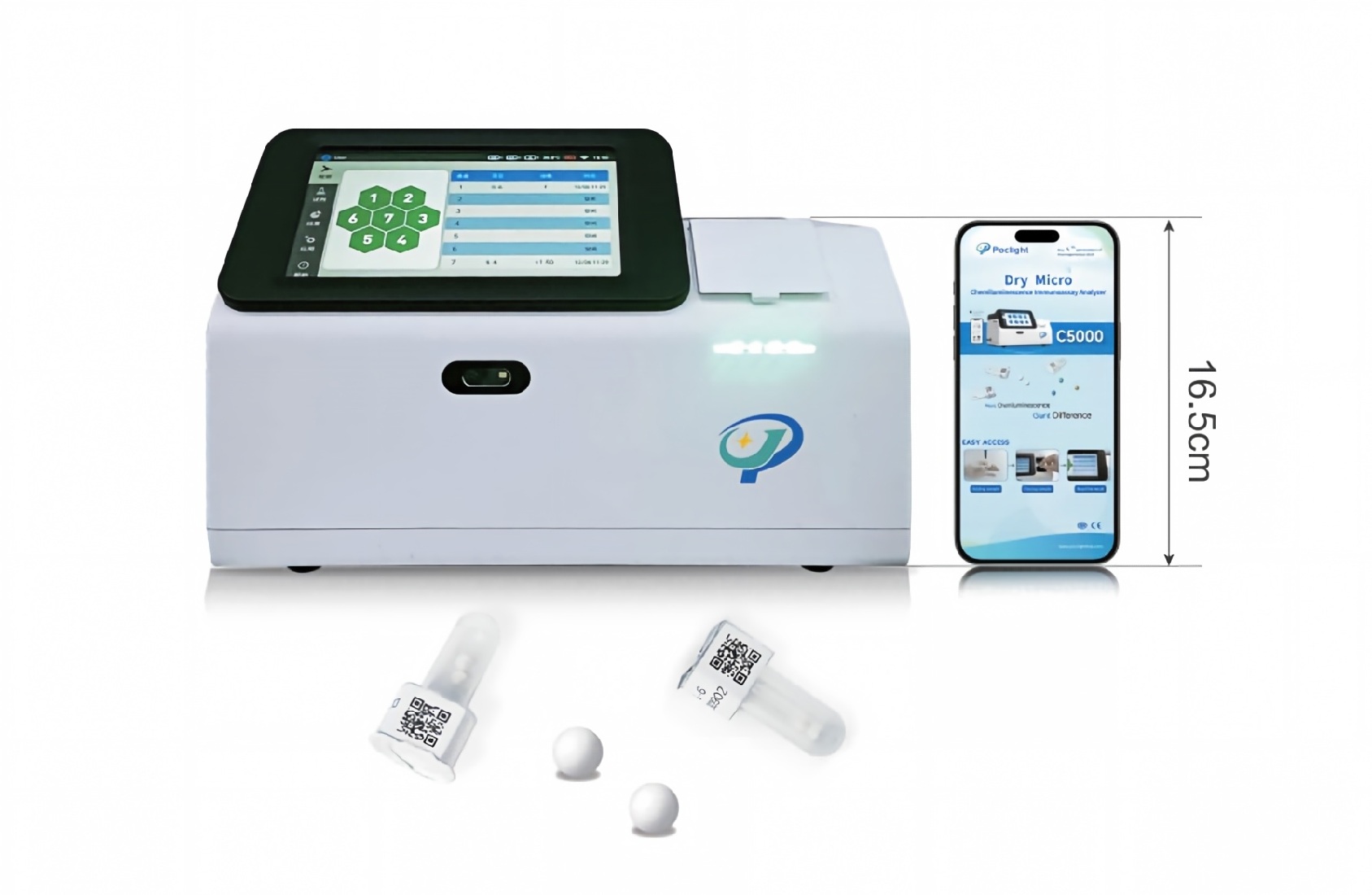
The C5000 is a compact, semi-automated homogeneous CLIA analyzer. Its practical value combines the wash-free detection chemistry, instrument architecture, and companion reagent formulation.
Technology Features and Practical Value
|
Technology Feature |
C5000 Implementation |
Practical Value |
|
Homogeneous design |
No magnetic-bead separation or washing |
Simplifies the assay sequence |
|
Compact design |
325 × 231 × 213 mm; approximately 8.5 kg |
Supports benchtop placement |
|
Independent channels |
7 detection channels |
Supports parallel, on-demand testing |
|
Assay time |
Commonly 3–15 minutes; assay-dependent |
Supports rapid analytical turnaround |
|
Lyophilized single-test reagents |
2–30°C storage and shelf life up to 18 months for applicable reagents; follow the label |
Simplifies stock management and transport within validated conditions |
These features have different origins. CRET-based signal discrimination supports wash-free detection; lyophilization and validated stability support reagent storage and transport; independent channels support test scheduling. The table above summarizes these distinctions.
Frequently Asked Questions
What is CRET in the Poclight C5000?
CRET means chemiluminescence resonance energy transfer. Poclight applies this principle with AE and GO in a homogeneous assay design that does not require magnetic-bead washing.
How does the C5000 perform homogeneous CLIA testing without magnetic-bead washing?
Target-dependent changes in the interaction between labeled components and GO alter the measured light signal. The assay’s calibration curve relates that signal to concentration without physical bound/free separation.
What practical benefits does this design offer smaller laboratories?
The compact analyzer and single-test reagents support on-demand testing with fewer washing-related consumables. Laboratories must still provide trained operators, quality control, and appropriate specimen handling.
How should laboratories evaluate the analytical performance of a CRET-based assay?
Review assay-specific precision, detection limits, measuring range, method-comparison bias, interference, and quality-control requirements. For a troponin assay described as high sensitivity, review precision at the 99th-percentile upper reference limit and detection in a healthy reference population; a low detection limit alone is insufficient. Verify that the validated performance meets the laboratory’s clinical requirements.
How the Poclight C5000 Implements a Compact Workflow
The C5000 combines independent testing channels with individually packaged reagents. The following specifications describe how this configuration supports day-to-day testing.
Compact Dimensions and Reduced Wash-System Maintenance
The C5000 measures 325 × 231 × 213 mm and weighs approximately 8.5 kg. Its base is slightly larger than an A4 sheet (297 × 210 mm); “A4-sized” is therefore an approximate comparison. Allow the installation clearance and operating conditions specified in the instrument manual.
The absence of a magnetic-bead washing sequence reduces washing-related maintenance. Routine cleaning, instrument checks, consumable replacement, and quality control remain necessary according to the operating instructions.
Seven Channels and Whole Blood/Serum/Plasma Flexibility
Seven independent detection channels allow different assays to run in parallel and support on-demand loading. Urgent tests can be assigned to an available channel; actual throughput depends on assay duration, channel occupancy, and operator handling.
Validated specimen types vary by assay. Most use serum or plasma; whole blood is acceptable only when explicitly listed in the relevant instructions for use.
Follow the specified anticoagulant, sample volume, preparation, and storage conditions. Whole-blood compatibility for one assay does not establish compatibility across the menu.
The table below summarizes manufacturer-reported instrument specifications; assay-specific requirements remain applicable.
|
Specification |
Value |
|
Detection channels |
7 independent channels |
|
Throughput |
Manufacturer-reported maximum: 80 tests/hour; workload-dependent |
|
Shortest assay time |
3 minutes for the shortest assays |
|
Sample types |
Serum/plasma for most assays; whole blood only where validated |
|
Precision |
Assay- and concentration-dependent; refer to the relevant validation data |
|
Display |
7-inch LCD touchscreen |
Speed, Sensitivity, and Simple Operation
Assay times commonly range from 3 to 15 minutes, with the shortest assays taking 3 minutes. These times describe the analytical procedure, rather than the full interval from sample collection to a verified result; specimen preparation and reporting can add time.
The chart below shows reported assay times for selected cardiac markers. The “first sample result” bar indicates the shortest platform assay time, not an additional cardiac test.
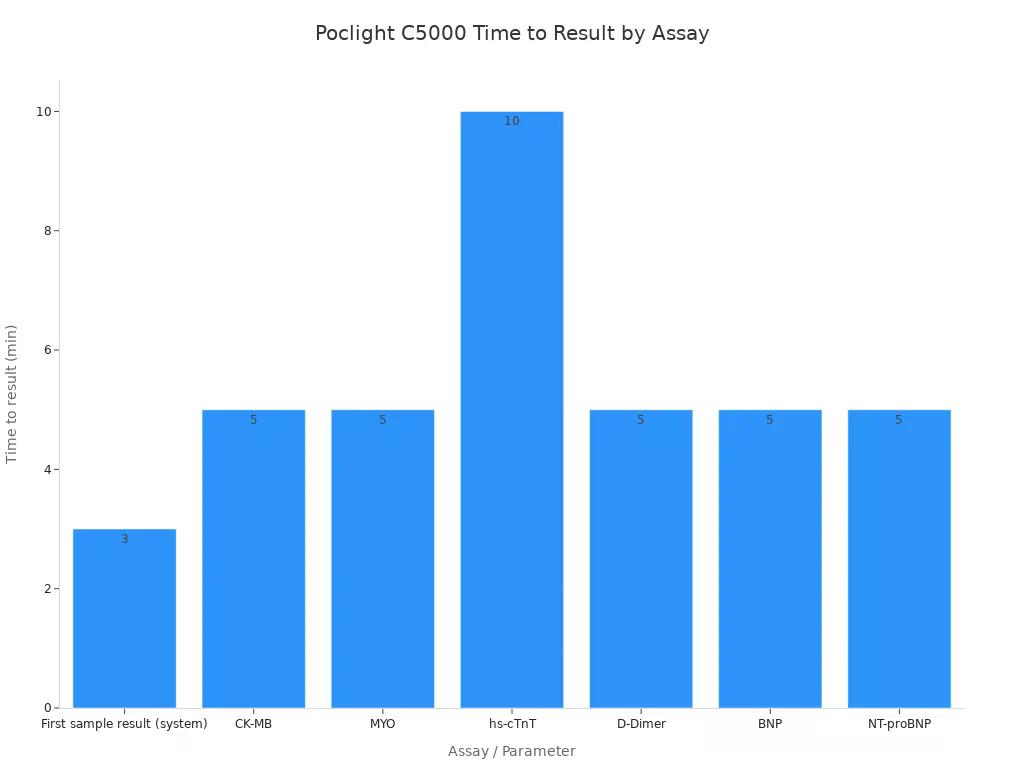
The C5000 uses a photomultiplier tube (PMT) to detect emitted light. Detector choice alone does not establish analytical accuracy. The table below lists manufacturer-reported assay times and measuring ranges, which are distinct from limits of detection.
|
Assay |
Assay time |
Reported measuring range |
|
CK-MB |
5 min |
0.3–300 ng/mL |
|
MYO |
5 min |
21–3,000 ng/mL |
|
hs-cTnT |
10 min |
5–10,000 ng/L |
|
D-dimer |
5 min |
0.25–20 mg/L |
|
BNP |
5 min |
15–5,000 pg/mL |
|
NT-proBNP |
5 min |
15–35,000 pg/mL |
The following inflammatory assays provide further examples.
|
Assay |
Assay time |
Reported measuring range |
|
CRP |
3 min |
0.5–320 mg/L |
|
PCT |
5 min |
0.02–100 ng/mL |
The routine workflow is summarized as adding the specified sample volume to the reagent cuvette, loading the cuvette, and reading the result. Follow the assay instructions for reconstitution, mixing, calibration, and quality control. The three-step summary does not replace the complete operating procedure.
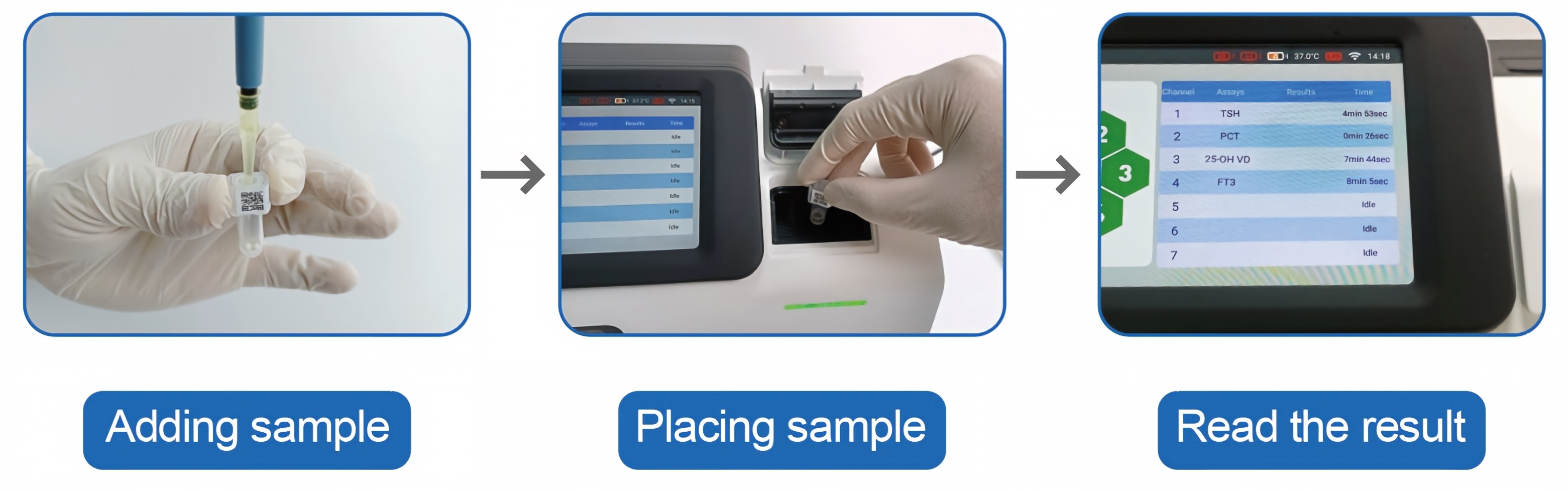
The assay menu covers inflammation, cardiac markers, thyroid function, fertility hormones, tumor markers, and metabolic testing. Menu availability, specimen types, and clinical indications depend on the reagent version and local authorization.
Comparing C5000 CRET with Heterogeneous CLIA
The relevant comparison is between the C5000’s homogeneous wash-free workflow and automated heterogeneous CLIA platforms that use physical separation. Both are forms of CLIA; CRET is not an alternative to chemiluminescence itself.
Workflow Differences
A typical heterogeneous CLIA assay includes incubation, solid-phase separation, washing, and signal measurement; the sequence varies by assay and platform. The C5000 omits the separation and washing stages. Its manual sample addition and individual cuvettes offer on-demand flexibility, while fully automated platforms may better suit high-volume workloads.
C5000 and Conventional Heterogeneous CLIA
|
Parameter |
Poclight C5000 |
Conventional Heterogeneous CLIA |
|
Methodology |
Homogeneous CRET-based CLIA |
Solid-phase immunoassay with chemiluminescent detection |
|
Separation and washing |
No physical bound/free separation or washing |
Physical separation and washing; magnetic beads are common |
|
Operation |
Semi-automated; 7 independent channels |
Often automated sample and reagent handling; model-dependent |
|
Reagents |
Single-test lyophilized reagents; storage and expiry follow the label |
Format and storage conditions depend on the reagent |
|
Assay time |
Commonly 3–15 min; assay-dependent |
Assay- and model-dependent; compare matched tests |
|
Throughput |
Up to 80 tests/hour under specified conditions |
Model- and workload-dependent |
|
Dimensions and weight |
325 × 231 × 213 mm; approximately 8.5 kg |
Model-dependent; compact systems are also available |
|
Sample types |
Serum/plasma for most assays; whole blood only where validated |
Assay-specific validated matrices |
|
Workflow |
Manual sample addition, cuvette loading, and result review |
Typically automated incubation, separation, washing, and measurement |
Implications for Space-Limited Laboratories
For space-limited laboratories, the C5000 offers compact placement, on-demand testing, and fewer washing-related consumables. Suitability should be assessed against workload, assay performance, specimen preparation, operator capacity, quality control, and total operating cost. Wash-free operation does not remove the need to manage used cuvettes, residual sample, and other laboratory waste.



 IPv6ネットワークがサポートされています | XML | サイトマップ | ブログ | プライバシーポリシー
伝言を残す
スキャンしてWeChatに送信 :


 English
 français
 русский
 español
 português
 العربية
 日本語
 Türkçe
 हिंदी
 Indonesia