1. Why micro-sampling matters in pediatric testing
For children, blood collection is not only a technical step—it can affect comfort, compliance and the quality of the diagnostic pathway. Pediatric veins are smaller and repeated phlebotomy may be stressful, especially during fever, respiratory infection or suspected systemic inflammation. WHO guidance emphasizes trained pediatric blood collection and consistent technique to reduce pain and psychological trauma, while CLSI highlights low-volume collection tubes and pediatric-appropriate devices to reduce collection difficulty and blood volume requirements.
In this setting, a micro-sampling strategy can help laboratories and near-patient testing sites obtain clinically useful inflammation information while keeping the blood draw as small and practical as possible.
2. From a small sample to an inflammation result
Poclight C5000 uses homogeneous chemiluminescence immunoassay technology with lyophilized single-dose reagents. For inflammation screening, CRP and SAA are particularly suitable for low-volume workflows: both support whole blood, serum or plasma samples, require only 5 μL sample volume, and provide results in 3 minutes. Other biomarkers such as PCT, IL-6 and HBP may be added when bacterial infection risk, severe inflammation or sepsis-related evaluation requires deeper assessment.
3. Key markers for pediatric inflammation screening
|
Marker |
C5000 assay information |
Clinical positioning for the blog |
|
CRP |
Whole blood / serum / plasma; 5 μL; 3 min; measuring range 0.5–320 mg/L |
Classic acute-phase protein for infection and inflammation assessment; useful as a rapid first-line inflammation marker. |
|
SAA |
Whole blood / serum / plasma; 5 μL; 3 min; measuring range 3–200 mg/L |
Acute-phase protein that can rise sharply within hours; complements CRP and may add value in viral or mixed inflammatory scenarios. |
|
PCT |
Serum / plasma; 200 μL; 5 min; measuring range 0.02–100 ng/mL |
Supports bacterial infection and sepsis-related evaluation; use with clinical assessment and other laboratory findings. |
|
IL-6 |
Serum / plasma; 100 μL; 15 min; measuring range 1.5–5000 pg/mL |
Early inflammatory cytokine; may support assessment of severe inflammatory response and neonatal sepsis warning when clinically appropriate. |
|
HBP |
Plasma; 50 μL; 5 min; measuring range 5.9–300 ng/mL |
May support assessment of bacterial infection, inflammation and sepsis-related organ dysfunction risk. |
4. Suggested testing pathway (adapt to local protocols)
• Start with clinical evaluation and age-appropriate blood collection; avoid unnecessary repeat sampling.
• Use CRP + SAA as a rapid low-volume inflammation screen where suitable for the clinical question.
• Add PCT, IL-6 and/or HBP when symptoms, severity, fever course or local protocols suggest higher-risk infection or sepsis-related evaluation.
• Interpret all biomarker results together with history, physical findings, CBC, cultures, imaging and treatment response.
5. Why compact CLIA fits pediatric near-patient workflows
|
C5000 feature |
Value for pediatric inflammation screening |
|
Compact analyzer |
C5000 dimension 325 × 231 × 213 mm; weight ≤8.5 kg. |
|
Fast results |
Time to first result from 3 minutes; inflammation tests such as CRP and SAA complete in 3 minutes. |
|
Flexible testing |
7 detection channels; supports multi-marker testing across inflammation and other clinical menus. |
|
Room-temperature logistics |
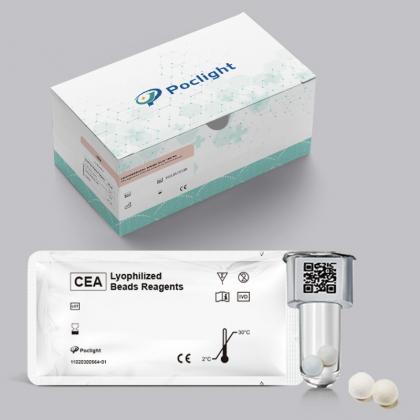
Lyophilized beads support 2–30°C transportation and storage, reducing cold-chain dependence. |
|
Simple operation |
Add sample → place sample → read result; suitable for laboratories seeking rapid CLIA testing in compact spaces. |
|
CTA: Looking to simplify pediatric inflammation testing with compact CLIA and low-volume sampling? Contact Poclight to explore how C5000 can support rapid, flexible and reliable inflammation screening closer to children and clinicians. |
Disclaimer: For professional and laboratory use only. Biomarker results should be interpreted together with clinical symptoms, medical history, other laboratory tests and local clinical protocols. Product availability and intended use may vary by market.



 IPv6ネットワークがサポートされています | XML | サイトマップ | ブログ | プライバシーポリシー
伝言を残す
スキャンしてWeChatに送信 :


 English
 français
 русский
 español
 português
 العربية
 日本語
日本語 Türkçe
 हिंदी
हिंदी Indonesia